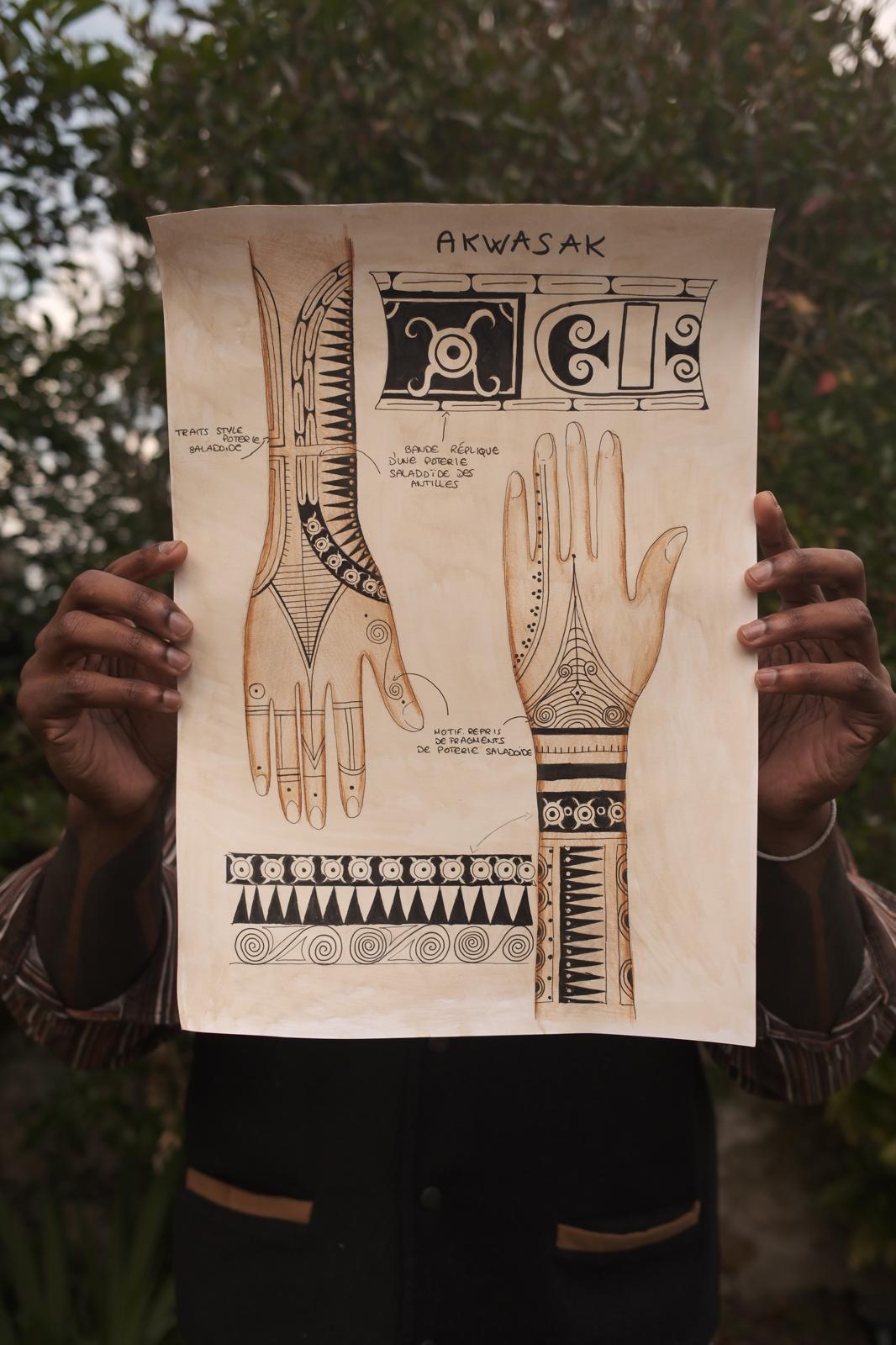
A fusion of the words Arawak and Saladoid. A word born from love, but above all from a conscious desire to unify our islands through ornaments inspired by pre-Columbian Caribbean cultures. I intentionally did not choose the terms Taíno or Kalinago, because my inspirations go even further back. You’ll understand why throughout this article.

I noticed the difficulties many Caribbean people face when they want to get something meaningful tattooed, something that truly reflects our uniqueness.
I’ve lost count of how many clients have felt lost in that process: should I base it on my mother’s origins? My father’s? I’ve been Caribbean for at least three generations… wait, I also have Indian ancestry.
As you can see, our identity is extremely complex. What does it actually mean to be Caribbean? Does it mean being mixed? Being mostly African? Indian? European?
That is exactly why I decided to look back at the people who lived on our lands before Christopher Columbus’s first voyage. Because how can we create a true Caribbean aesthetic without looking at those who lived on these lands before Columbus arrived? I became interested in the people who laid the earliest foundations of what would eventually become our modern Creole cultures.
Today, many Caribbean people get tattoos inspired by Greek imagery, American influences, Roman references, Polynesian designs, Japanese styles, Nordic symbolism, and many others. Yet very few tattoos are directly inspired by the Caribbean itself. Not because we have nothing—but because our pre-Columbian history has largely been erased or ignored.
I also see this within my own clientele. African references are not always an automatic source of inspiration, and that’s understandable. Not all of us feel connected to that motherland in the same way, even though many of us carry strong African ancestry. To illustrate that, I’m from Dominica and Guadeloupe, and my DNA results show that I’m 94% Nigerian. Yet my identity remains deeply Caribbean
The pre-Columbian history of the Caribbean is far older and more complex than we are often taught. Before Christopher Columbus’s first voyage in 1492, several waves of migration crossed the Caribbean Sea from South America and gradually shaped the archipelago.
Archaeologists reconstruct this history through the material remains left behind by these populations: stone tools, food remains, burial sites—but most importantly, ceramics, which act as a true cultural signature. The shapes of pots, engravings, pigments, and production techniques help researchers distinguish different settlement periods today.
Ceramics are one of the few materials that survive across centuries without disappearing. That is why archaeologists refer to “ceramic periods” and even “pre-ceramic periods”—not because there was no culture before pottery existed, but because traces before pottery are much harder to find and date. In other words, ceramics are not just everyday objects—they are memory for us as Caribbean people
The earliest known populations of the Caribbean appear during the Lithic or Casimiroid period between roughly 5000 BCE and 2000 BCE. They arrived from the coasts of Venezuela and potentially other parts of South America. They mainly lived through fishing, hunting, and gathering, while relying heavily on stone tools. At that time, pottery did not yet exist in the Caribbean.
Between 2000 BCE and 500 BCE, the Ortoiroid period saw new populations moving between Trinidad and Tobago and the Lesser Antilles. These communities remained heavily connected to marine resources and inter-island mobility.
The Huecoid period, between 500 BCE and 200 CE, remains debated among archaeologists, particularly in Puerto Rico. However, it reveals more complex decorative objects and increasingly sophisticated craftsmanship.
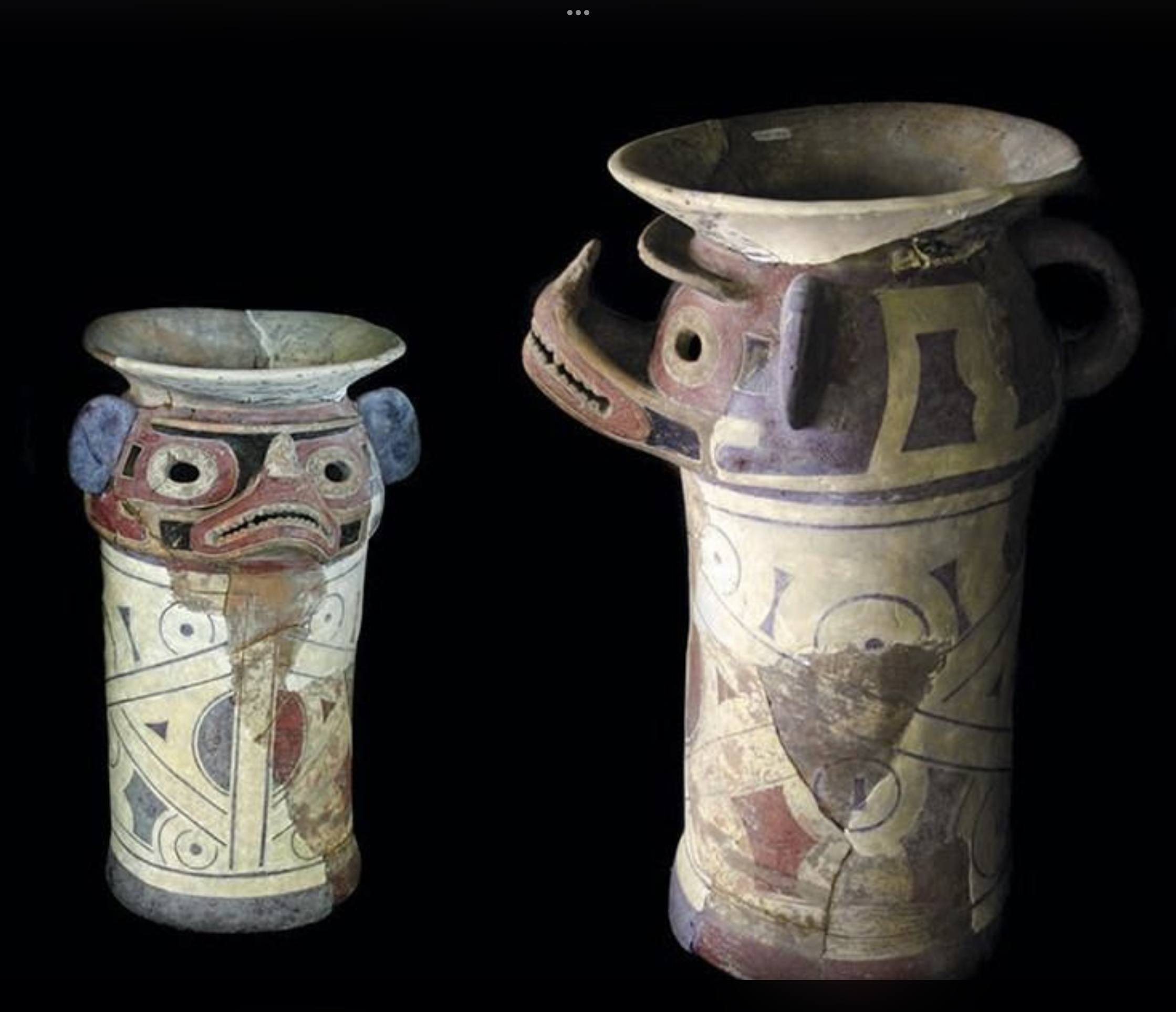
It is truly during the Cedrosan Saladoid period, between 500 BCE and 600 CE, that Akwasak finds much of its inspiration. Originating from the Orinoco River basin in present-day Venezuela, Saladoid populations gradually migrated to Trinidad and Tobago before moving upward through the Lesser Antilles and eventually reaching the Greater Antilles. This is exactly why Akwasak makes sense: Saladoid cultures managed to spread their visual language throughout much of the Caribbean. No matter where you’re from in the region, this history belongs to you.
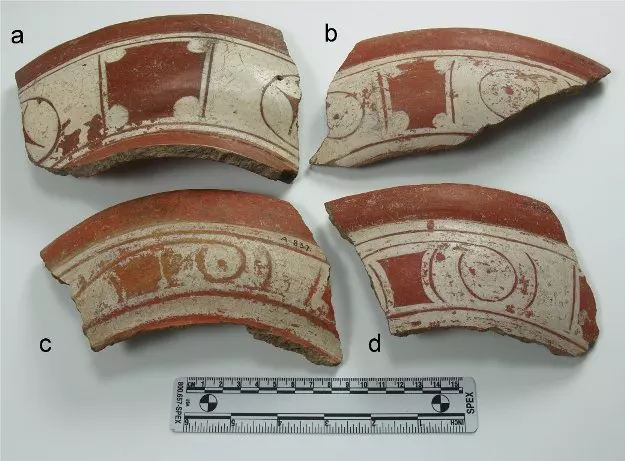

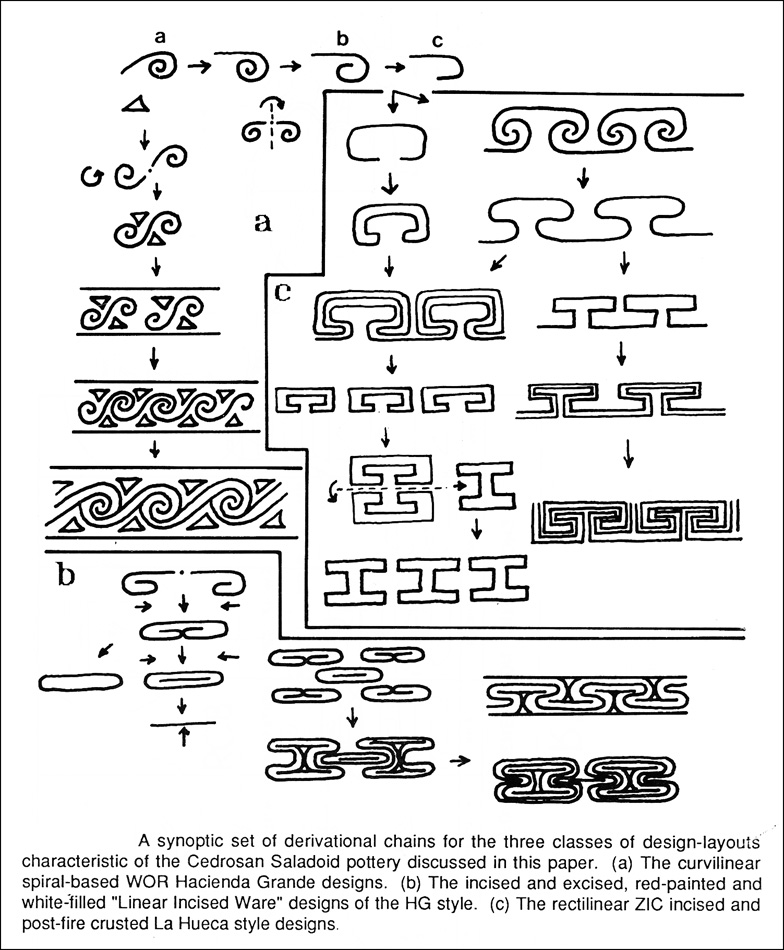
They left behind one of the richest visual legacies in pre-Columbian Caribbean history through geometric motifs, repetitive forms, stylized faces, complex engravings, and red, white, and black pigments. It is within these motifs that I found a visual foundation capable of inspiring a contemporary Caribbean tattoo aesthetic.
Between 600 and 1000 CE, the Troumassoid period marked an evolution in ceramic traditions across different islands. Between 1000 and 1500 CE, the Suazoid period reflected further cultural transformations across the Lesser Antilles. Finally, between 1200 and 1500 CE, the Cayoid period represents some of the last major pre-Columbian cultural dynamics before European arrival.
The arrival of Christopher Columbus’s first voyage marked a brutal rupture. Colonization, violence, disease, and the gradual erasure of many Indigenous traditions deeply transformed the history of the Caribbean.
Akwasak is a contemporary proposal inspired by Caribbean archaeological archives—particularly Saladoid traditions—in order to create a tattooed visual language that speaks to people from Jamaica, Puerto Rico, Martinique, Guadeloupe, Dominica, Haiti and beyond.
This style does not claim to perfectly recreate the tattoos of our ancestors. No one can say that with certainty.
What it does offer is something fundamental: imagining what a Caribbean tattoo aesthetic rooted in our own history could look like.
Creating Akwasak today means refusing to let our visual imagination be constantly imported from elsewhere. It is a reminder that our islands existed before invasion—and that our artistic future can still speak to our past.
When building Akwasak, I also looked at cultures with strong traditional tattoo identities—particularly Polynesian cultures, who gave the world the word tatau, which later became “tattoo.”
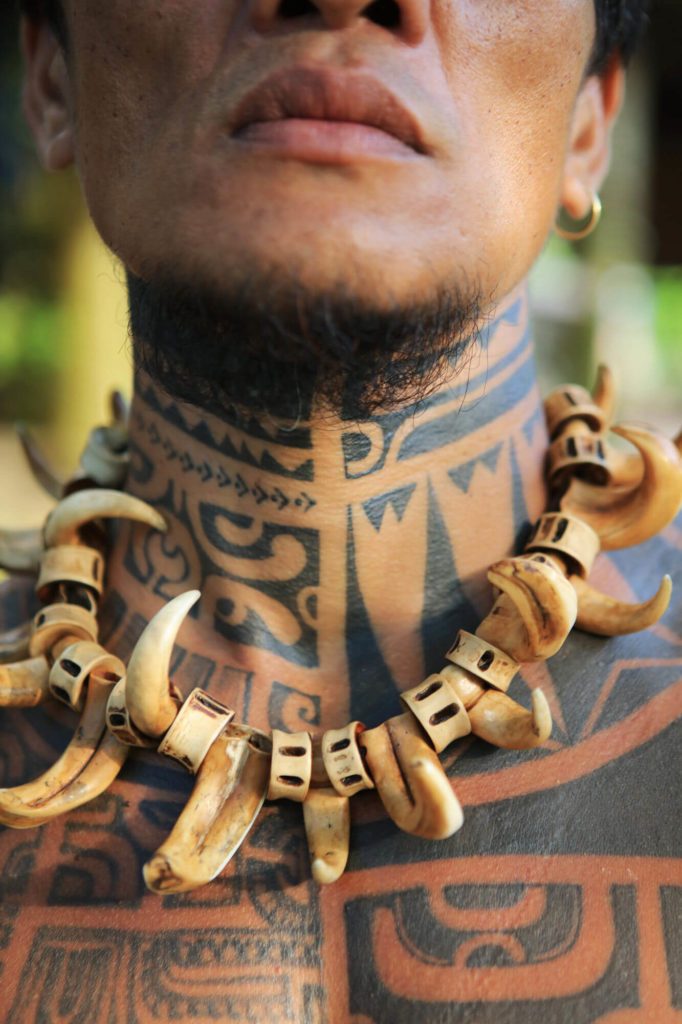
I was also inspired by the traditional Batok practices of the people of Kalinga Province. The way their designs move with the body deeply inspired me.It was important to me not to simply call this “Caribbean tattooing.” The word tattoo itself comes from sacred Polynesian heritage.

Akwasak deserved its own name.
It is an Akwasak—not simply a tattoo—because it is tied to our ancestors.
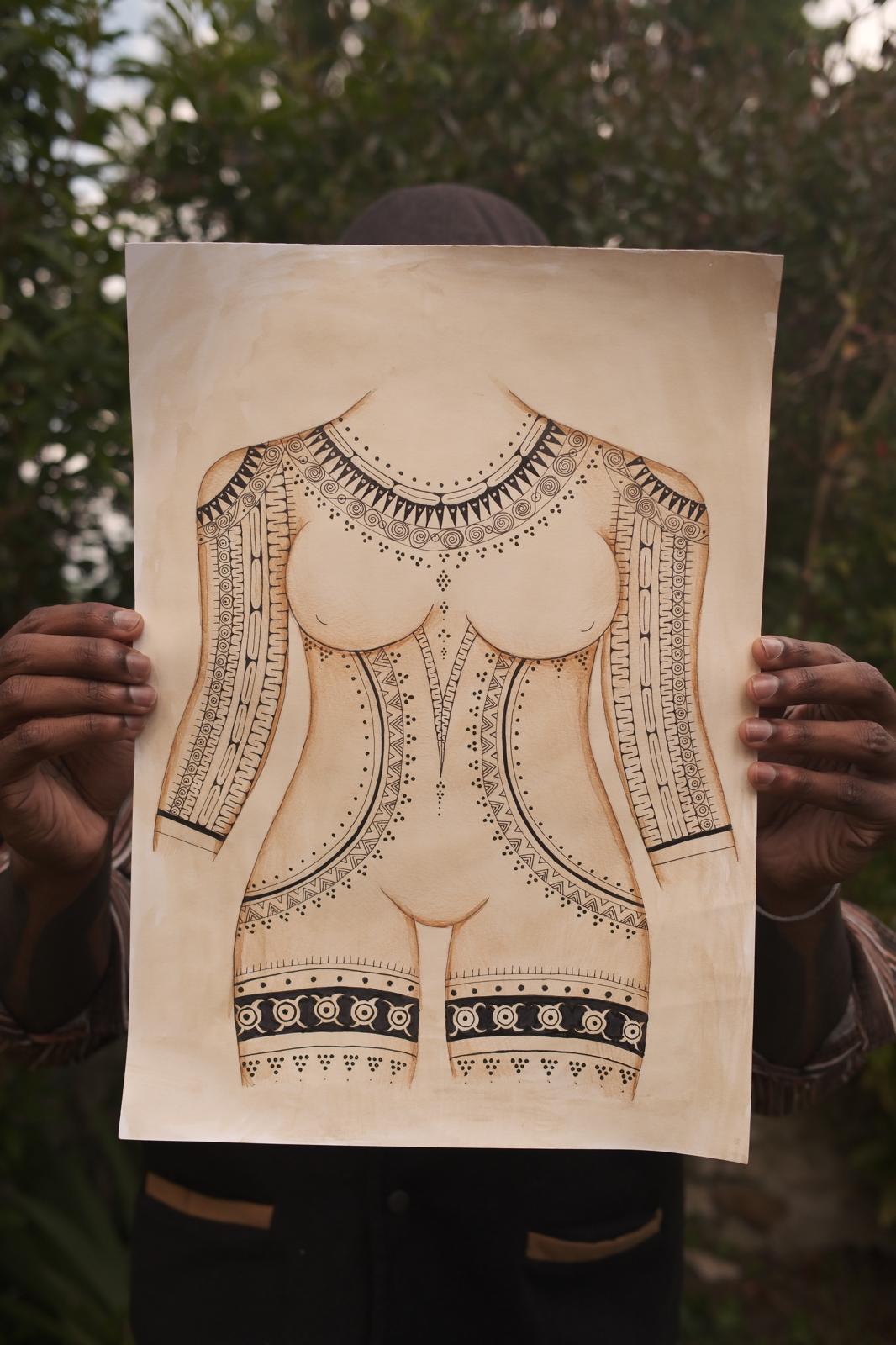
Below, you’ll see the body compositions I’ve developed so far. Feel free to follow the Akwasak project to discover future creations. As I mentioned in my video, the motifs culturally belong to all of us. However, if you reproduce my personal compositions, I ask that it be done respectfully. And if you choose another tattoo artist, ask them to create it freehand. In my opinion, placing a stencil on something this symbolic misses the entire point.

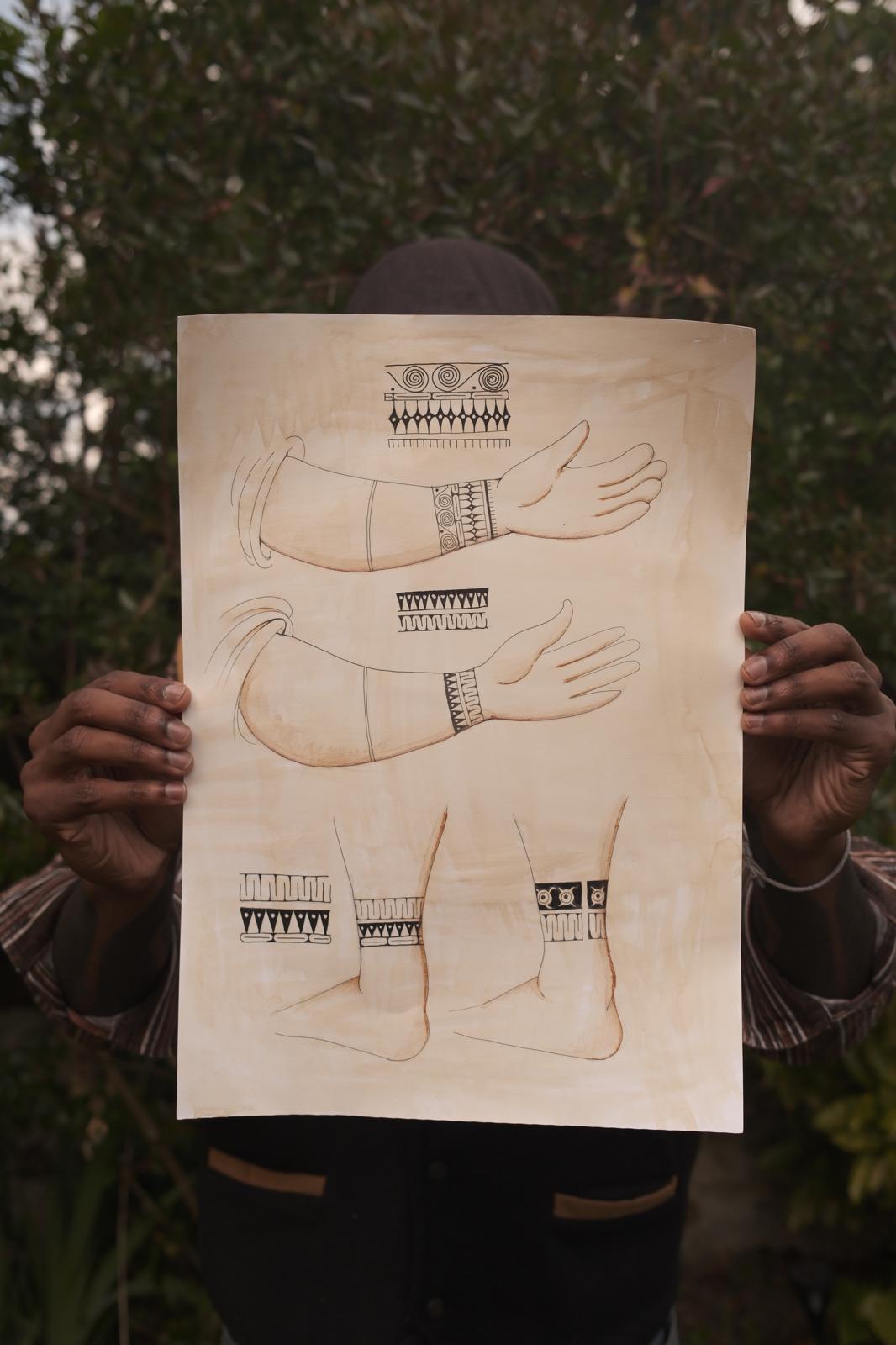
Lastly, send me your support. This is work I do voluntarily. Simply crediting that this comes from an artist trying to create change—Dimitri Andrew aka @justpigmentmeans a lot to me and gives me the strength to continue creating for our community.
May our ancestors guide your path in everything you do. Ashé.
Fitzpatrick, Scott M.
“The Pre-Columbian Caribbean: Colonization, Population Dispersal, and Island Adaptations.” PaleoAmerica, 2015.
https://www.tandfonline.com/doi/abs/10.1179/2055557115Y.0000000010
Bérard, Benoît
“The Saladoid.” In The Oxford Handbook of Caribbean Archaeology. Oxford University Press, 2013.
https://univ-antilles.hal.science/hal-00975450/document
Hofman, Corinne L.
“The Post-Saladoid in the Lesser Antilles (A.D. 600/800–1492).” In The Oxford Handbook of Caribbean Archaeology. Oxford University Press, 2013.
https://univ-antilles.hal.science/hal-00975450/document
Keegan, William F. & Hofman, Corinne L.
The Caribbean Before Columbus. Oxford University Press / University of Alabama Press, 2017.
https://univ-antilles.hal.science/hal-00975450/document
Wilson, Samuel M.
The Archaeology of the Caribbean. Cambridge University Press, 2007.
https://www.latinamericanstudies.org/ancient-caribbean-pottery.htm
Musée Saint-Martin – Histoire précolombienne
Académie de Guadeloupe – Art amérindien en Guadeloupe (Musée Edgar Clerc)
Académie de Martinique – Archéologie amérindienne de la Martinique
Université des Antilles – Research document
L’Art Taïno : Chefs-d’œuvre des Grandes Antilles Précolombiennes

.svg)